Loading article…
Moving to Charlotte From a Big City (2026): Best Neighborhoods for City Couples
You're used to walkable blocks, good coffee, interesting bars, and people your age outside on a Saturday. You're done renting but don't want a cookie-cutter subdivision 40 minutes from everything. The good news: Charlotte has real city neighborhoods. The bad news: they fill up fast and prices reflect it. Here's where city people from Chicago, DC, and New York actually end up — and why.
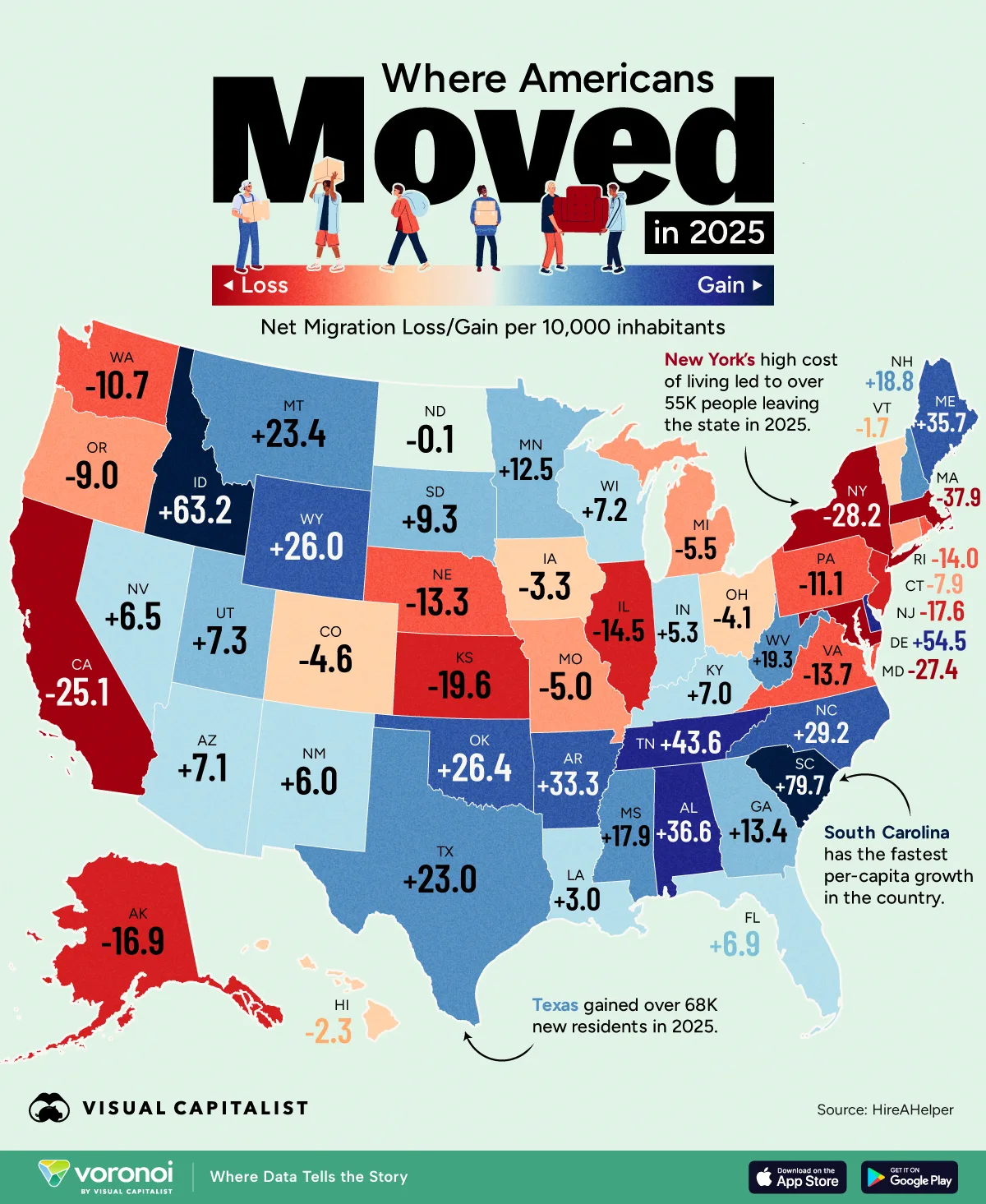
Migration context (2025): trend vs fit
National migration maps show where people are moving at a state level. That signal is useful context, but relocation decisions still hinge on neighborhood-level fit: commute, budget, schools, and safety.
- Use macro migration data to identify momentum.
- Use ZIP and neighborhood data to make the final decision.
Compare city-style Charlotte neighborhoods by your priorities →
Illustration for migration context; themes align with public reporting (e.g. HireAHelper, 2025).
First: avoid these common mistakes
- Don't anchor on Uptown. Charlotte's city center is mostly office buildings after 6pm. The actual energy is in South End, Dilworth, Plaza Midwood, and NoDa.
- Don't assume Fort Mill is "basically Charlotte." It's a 40-minute drive that feels like a different world if you want walkable neighborhood life.
- Walk score matters more than you think. Most of Charlotte is car-dependent. The neighborhoods below are the exceptions.
The two neighborhoods worth comparing: Dilworth vs Plaza Midwood
Both are walkable, interesting, and within 10 minutes of Uptown. Both attract the 30-something professional crowd. The difference is feel: Dilworth is more established and polished; Plaza Midwood is grittier, more eclectic, and a bit younger in energy.
| Metric | Dilworth / South End / Wilmore | NoDa / Plaza Midwood / Chantilly / Belmont / Villa Heights |
|---|---|---|
Walk score | 77 | 58 |
Safety score | 68 | 52 |
School score | 84 | 76 |
Median home price | $600,000 | $481,450 |
Rent (3BR apt) | $4,579 | $2,495 |
Commute to Uptown | 7 min | 17 min |
Transit score | 49 | 45 |
How each compares to Charlotte overall
Dilworth / South End / Wilmore
- Rent: 130% higher than Charlotte median
- Home Price: 33% higher than Charlotte median
- Schools: Above average for Charlotte
- Safety: Lower than city average
Dilworth is the most walkable historic urban core in Charlotte, with light rail access and noticeably livelier evening activity than most suburbs. Schools rank well above metro typical, and parks with trails are abundant nearby. However, safety scores run below Charlotte's metro baseline, and both rents (91% above median) and home prices (69% above median) reflect the central-city location | Daily errands are very walkable—car dependency is low compared to typical Charlotte neighborhoods. Airport access is straightforward from here. Uptown and University City job corridors involve short drives; Ballantyne is moderate, favoring those whose work centers on downtown or radiates outward from the core | **The tradeoff:** You accept significantly higher housing costs and lower-than-typical safety for walkable urban density, strong schools, and easy downtown commutes. Right for young professionals, small families, or empty-nesters prioritizing walkability and central access; reconsider if suburban peace, car-free evenings, or budget constraints matter most
NoDa / Plaza Midwood / Chantilly / Belmont / Villa Heights
- Rent: 25% higher than Charlotte median
- Home Price: 16% higher than Charlotte median
- Schools: Similar to Charlotte average
- Safety: Lower than city average
NoDa is an artsy, rapidly gentrifying urban core neighborhood with schools near metro typical and a mix of parks and trails within easy reach | Safety scores run below Charlotte metro norms, and daily errands require some car reliance despite moderate walkability; evening activity sits mid-range for the metro | The tradeoff: homes run 16 percent above Charlotte median, and Ballantyne commutes stretch longer—but you gain strong northeast/University City corridor access, art-driven character, and robust park proximity. Best fit for creatives or professionals anchored north/northeast; those prioritizing top safety or south-corridor commutes should look elsewhere
Who belongs where
Choose Dilworth if…
- You want the most polished, walkable Charlotte neighborhood
- Tree-lined streets and craftsman homes remind you of Lincoln Park or Capitol Hill
- You have or plan to have kids — schools and safety are strong
- You're buying and want reliable long-term value appreciation
Choose Plaza Midwood if…
- You want Wicker Park energy — bars, murals, independent coffee, dive bars next to cocktail bars
- You're fine with more character and less polish
- Price matters — you get more house for the money vs Dilworth
- You want to be near NoDa (10 min) and South End (10 min) equally
What about South End, NoDa, and Myers Park?
South End is the most urban option — light rail, density, breweries, new apartment towers — but it's mostly renting territory now. Buying is expensive and inventory is tight. NoDa is Charlotte's arts district — cheaper, grittier, great if you love live music and don't mind the tradeoffs.Myers Park is where the Dilworth crowd goes when they can afford to — beautiful, quiet, great schools, but less walkable and more expensive.